

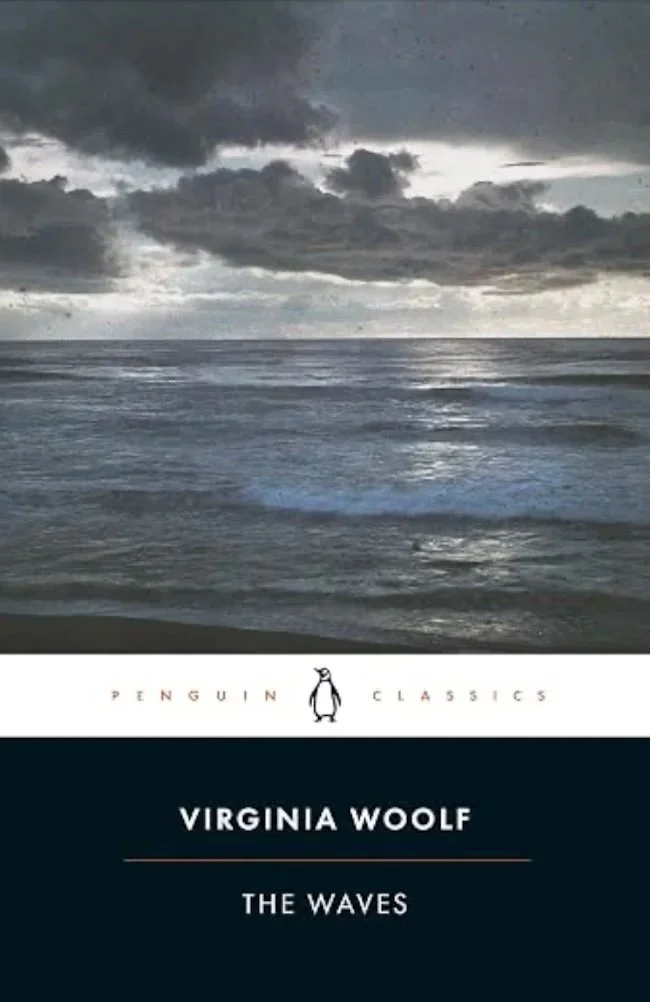
The Waves is the result when an important writer gives herself permission to follow her instinct, experience and muse to brilliance… against the norm. Often called experimental when considered within the confines of traditional publishing, the novel, read alongside Virginia Woolf’s earlier masterpieces Mrs. Dalloway and To The Lighthouse, emerges as a hard‑won ascent to an even more significant literary achievement. At least, that is my view; notable critics and scholars either disagree or remain undecided.
Published in 1931, The Waves was Woolf’s second‑to‑last novel to appear in her lifetime. It shares with James Joyce’s Ulysses (1922) an intense commitment to the rendering of interior consciousness.
Faces recur—they press their beauty against the walls of my bubble—Neville, Susan, Louis, Jinny, Rhoda, and a thousand others. How impossible to order them rightly, to detach one separately, or to give the effect of the whole—again, like music. What a symphony grew up, with its concord and its discord and its tunes on top and its complicated bass beneath! Each played his own tune—fiddle, flute, trumpet, drum, or whatever the instrument might be. With Neville, “Let’s discuss Hamlet.” With Louis, science. With Jinny, love.
The novel follows the individual and collective lives of six friends from childhood through old age. Bernard, Susan, Rhoda, Neville, Jinny, and Louis each reveal themselves—and one another—through stream‑of‑consciousness monologues. These six characters continually strive to regain a sense of harmony. There is no omniscient narrator to guide the reader through their pursuit of meaning. Yet through their distinctive thoughts and feelings, we experience all six lives: from youthful optimism to university, to professional life, to marriage and children for some, and finally to the disillusionment of later years.
Years pass like waves, with the push and pull of tides. Rhythms shift with moods, ruminations, and intimate desires. Friendships evolve, fracture, rebuild, and knit themselves together again, scarred but wiser. To age is to suffer quietly and to measure oneself against long‑held assumptions.
